
Building into the future of work in rural communities
I recently came across this statement: “AI is reshaping the future of work by 2030- 70% of the skills required to do our jobs will have changed accelerated by AI”.
This wasn’t the first time I heard about how AI is shaping our work environments and changing the nature of the jobs available and those that will be created in the coming times. But this time, when I read the statement, something hit me because of what I was trying to work on in a community I work with in rural Nakuru, Kenya. While doing some work in supporting education for girls in the community in since 2021, different needs and realities have been emerging year after year. I first dealt with keeping teenage girls in school by distributing sanitary hygiene products and school supplies, then immediately, the community asked who would help the girls who complete their studies and can’t transition to either employment or self-employment.
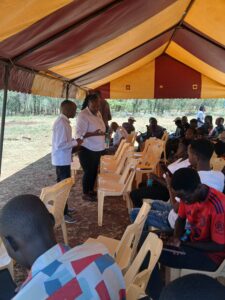
We then added onto our education program to include skills training and career mentorship in 2025. Because most of these communities have little or no contact with advanced technologies, our skills training support has started with basic IT literacy classes for youth (though we give emphasis to young women, we also include young men) through a collaboration with a CBO that runs a community ICT hub. Thirty youth began the training in January which we paid for as a scholarship for them. These young people have high school education and some tertiary but have never used a computer and any systems run to perform tasks using a computer. The highest form of technology that they have interacted with are smartphones which they basically use for communication and basic internet access especially social media interactions.
This points to how much advanced technology will leave behind a big portion of populations in developing and least developed countries as it moves at lightning speed. As AI is taking over most tasks in workplaces, more than half of the potential workers in these regions is yet to get in contact with basic IT functions. This is putting into consideration that 55% of the population in Africa in rural and in Kenya, 70% reside in rural areas.
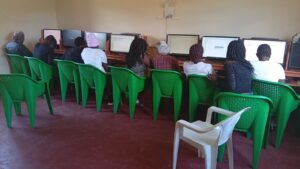
In the coming months, our mission is to introduce AI and advanced IT skills to the learners and encourage young people in the community and surrounding areas to take up the skills. The future of work will not wait neither will opportunities consider that anyone lived in marginalization. A job seeker will either have the requisite skills or ready to miss opportunities. Our efforts are to change the chances of at least 10s or hundreds of the youth in these hidden communities and walk with them towards the future with a little readiness to compete with others across the world.
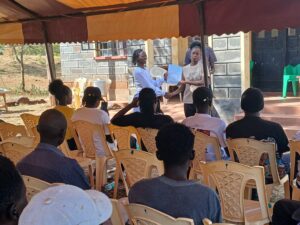
We all have an opportunity to change the life of at least one person and contribute to changing the lives of many through small acts of community solidarity.